Posted January 25, 2018 by Ali's Woodinville
With new cars, or at least cars you’ve owned since they were new, folks usually do a good job following the factory recommendations. When you know the entire history, following the service schedule in the manual is a little easier. There’s usually a recommended interval for oil changes and for servicing the whole vehicle, and that includes a recommended time to replace the timing belt.
If you’re getting close to the scheduled time for timing belt replacement, it’s one repair you should go ahead and do a little early. More importantly, if you’re not sure when your timing belt should be replaced and your mechanic tells you it’s time, get it done. Many other areas of your car can be put off (though they shouldn’t be), but the timing belt is the one that will punish you the most if it isn’t replaced before it breaks.
Why It Matters If the Timing Belt Breaks
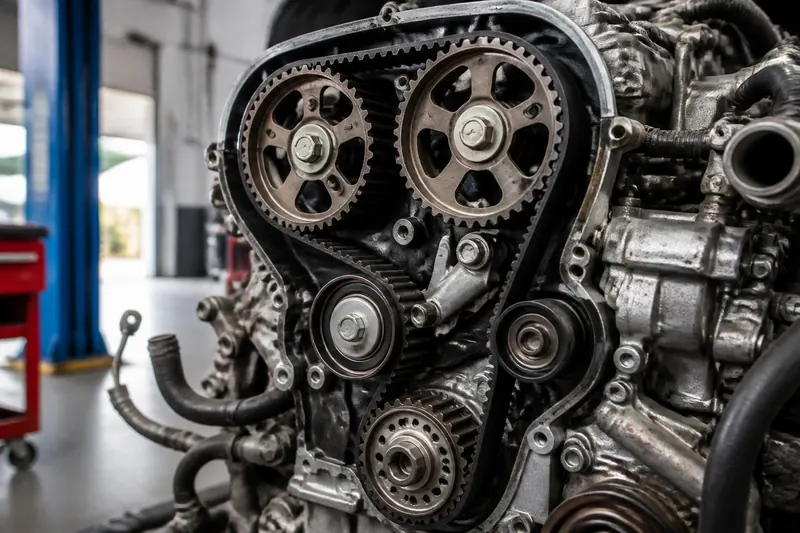
Why is it so important that your timing belt doesn’t break? Even though it may look like a small belt in a large car, it’s a vital part of the engine. If it breaks, the engine shuts down on the spot, so waiting is not an option. That’s a safety issue for you, but a broken timing belt can also cause expensive damage to the pistons, valves and more. The timing belt coordinates the engine’s functions, keeping the crankshaft and camshaft in sync so the valves open and close at exactly the right moment. If it isn’t working correctly, it shuts down your whole car.
Many engines are what mechanics call “interference” engines, where the valves and pistons use the same space at different moments. On those engines, a broken belt lets them collide, and a simple belt job turns into major engine repair. Not every car has a timing belt, either. Many newer engines use a timing chain instead, which usually lasts much longer, and your owner’s manual (or a quick check at our shop) will tell you which one you have.
When Should You Replace Your Timing Belt?
There are no particular symptoms to watch for. A mechanic can visually inspect the belt for wear, which can give some clue as to whether it was changed at the last recommended interval. If you’re unsure when or if it was ever changed (it usually needs to be done every 60K to 100K miles), get it changed at your technician’s first sign of concern, and then keep track of that mileage so you’ll know ahead of time when the next replacement is due.
Replace These Parts at the Same Time
We know, it’s easy for a mechanic to say “just get it replaced,” but a break can cost you thousands. In this case, it’s very important to play it safe.
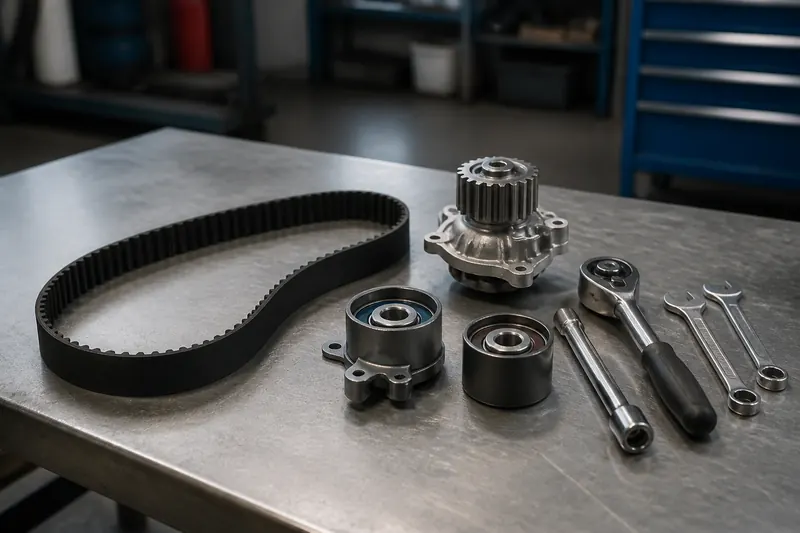
Another helpful tip: when you have a timing belt replaced by a professional (this is not a do-it-yourself job), ask about other maintenance that costs less to do during this invasive procedure. The car often has to be partly taken apart and the labor can be substantial, so while the mechanic is in there, you may want to have the water pump replaced. They should also at least inspect, if not replace, the tensioner and idler pulleys to make sure they stay in good working order for the new belt. A good mechanic will bring up these other parts with you. It’s not an upsell. It’s what a good mechanic does to look out for you.
Trust Your Mechanic on This One
Here’s hoping you never run into trouble with your timing belt, and we hope these tips and explanations have helped. On timing belts, you should trust your mechanic’s advice, and if you can’t trust the mechanic you go to, find a new mechanic. In the Woodinville, Bothell and Kirkland areas, we’re ready to be your auto repair experts. If you live in the area, call Ali’s Woodinville Auto Repair with any questions.
Call 425-420-1630 or request an appointment, and we’ll check your timing belt history and mileage.