Posted October 17, 2014 by Ali's Woodinville
Customers ask us all the time whether they should check their fluid levels themselves or leave it to us professionals. There’s a very easy answer: both you and your trusted shop (hopefully ours) should be checking them. Every time you bring your car in for any kind of service, your mechanic should run through, check, and if necessary top off your fluids. To be clear, you should definitely know how to do a simple check of all the major fluids, but that doesn’t mean they’re all fluids you should add or correct yourself. That’s a different story altogether.
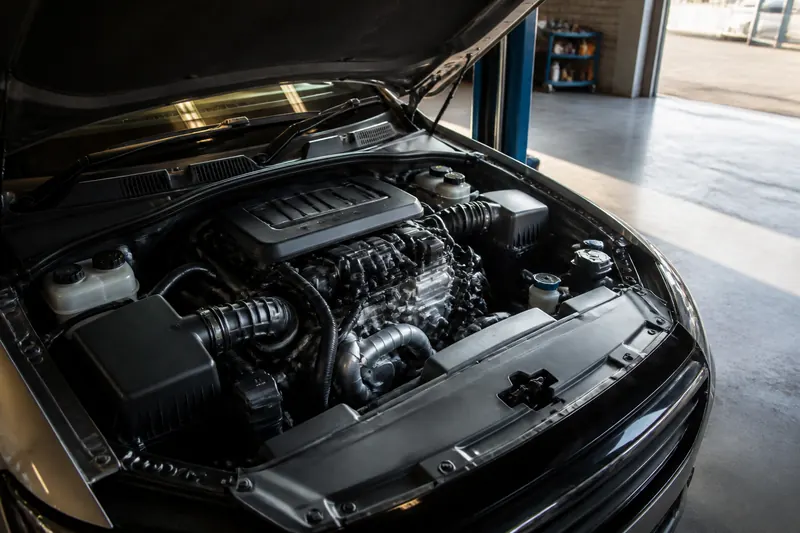
Some of the fluid systems in your car are very easy to understand, and it’s easy to add fluid up to the fill line. Others shouldn’t be touched unless you have the proper training. All of the fluids can be checked and noted simply, though, and if there seems to be an issue with any of them, let your favorite mechanic know.
Which fluids should you do a simple check on every one to two months? First, park your car on a flat surface and set the parking brake (safety first). Then go through this list of fluids, and note which ones you can safely add to on your own. The beauty of our business is that you don’t have to check your fluids yourself quite as often if you bring your car to us regularly (before something breaks). We’ll always check these for you and save you the hassle.
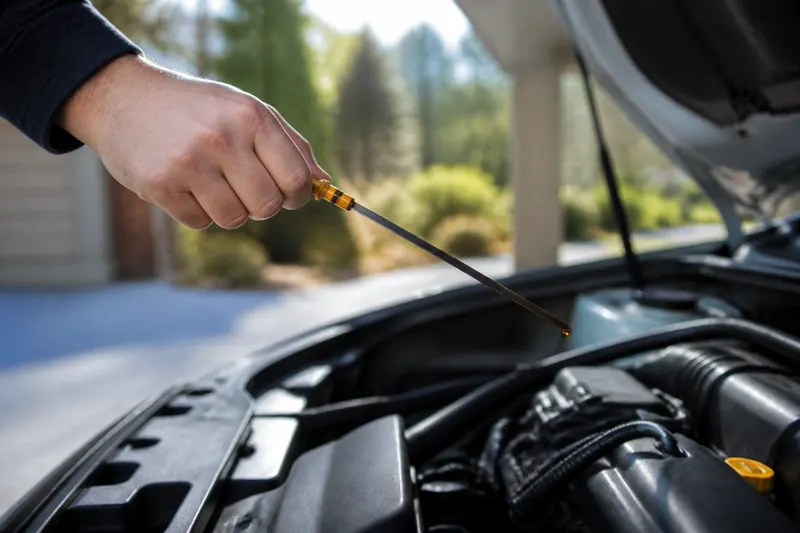
1. Motor Oil
The most common one is your car’s motor oil. You check it with the dipstick. Pull the dipstick out, wipe it off, push it all the way back in, and pull it out again. It will give you a pretty clear idea of how much oil is in there and whether it’s low. Check it with the engine off, ideally after the car has sat for a few minutes so the oil can drain back down.
If you’ve read the car’s manual, know what kind of oil your car needs, and feel comfortable doing it, you can add oil yourself. If the oil looks very dark or is way too low (which can point to a leak or an engine that’s burning oil), you’ll want to get it into the shop to be checked. If you’re getting your oil changed on schedule, you’ll probably find that your engine doesn’t need any added oil and the oil won’t be overly dark.
Oil change intervals have stretched over the years. Many newer cars running synthetic oil go 5,000 miles or more between changes, so follow the interval in your owner’s manual or the reminder on your dash. Some newer cars don’t have a dipstick at all and show the oil level electronically instead. Your manual will explain how to read it.
2. Coolant/Antifreeze Reservoir
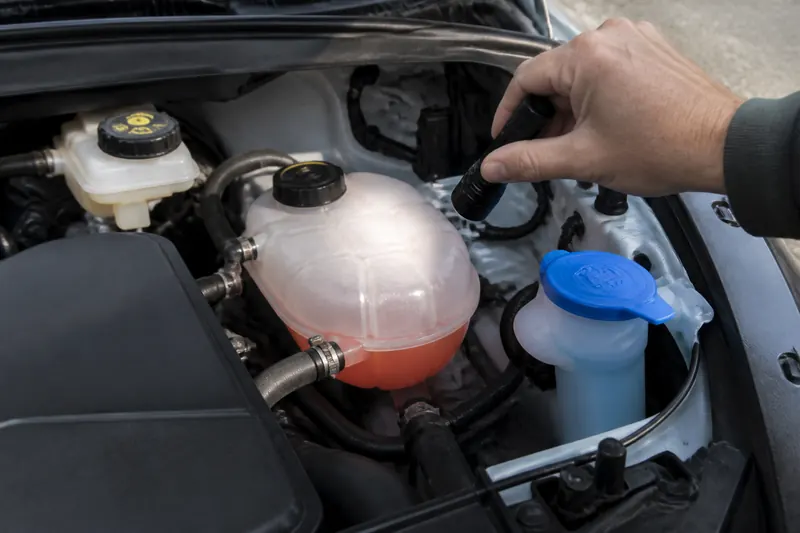
You can check this reservoir easily in most cases. If you have a translucent (see-through) plastic reservoir, as most vehicles do, you can easily see how close the level is to the “FULL” mark. If you have to take the cap off to check, wait until the engine has fully cooled down. The cooling system is under pressure when it’s hot, and opening it can spray scalding coolant.
If this fluid is a little low, you can add more antifreeze if you feel comfortable and follow the directions. Use the type your owner’s manual calls for, since coolants aren’t all the same. You may need to dilute your antifreeze first, depending on which kind you buy (pre-mixed 50/50 coolant is ready to pour). If your coolant is very low, you likely have another issue going on, such as a leak. Take the car in to be inspected by a professional. Either way, you’ll be glad you did this check yourself.
3. Power Steering Fluid
You can usually read this level through the reservoir wall, so it’s another easy check. You can add fluid to the fill line if you’re comfortable, but if it looks oddly low or you notice a possible issue, get it to the mechanic. Usually no adjustment is needed, or only a very small one. Otherwise, it may be a bigger problem that needs attention. Many newer cars have electric power steering with no fluid at all, so if you can’t find a reservoir, check your manual before you go looking.
4. Windshield Washer Fluid
This isn’t the fourth most important fluid, but it’s the last one you should be adding yourself when it’s low. This one is simple. You can usually see the level without taking off the cap, and if it’s getting low (which is normal), just add more. Washer fluid is easy to take for granted, but seeing clearly while driving is very important, so being able to clean off bugs and road grime as you drive matters too. When you buy washer fluid, get one that won’t freeze easily in low temperatures.
5. Transmission Fluid
On many cars you check this with a dipstick as well, but this one is usually checked with the engine running and warmed up. The fluid is usually reddish. Make note if it’s black, brown or very dark. Transmission fluid is changed on a set schedule, so check your manual. If it’s low or looks off, our advice is not to add or change the fluid yourself. This one is for the pros.
Many newer automatic transmissions don’t have a dipstick at all. They’re checked and filled from underneath, with the car level and the fluid at a specific temperature, which is another reason to leave this one to a shop. If you’re in the Woodinville, Bothell or Kenmore area, bring it right in to us at Ali’s auto repair in Woodinville for a transmission fluid check or service.
6. Brake Fluid
Check this one, but don’t try to adjust it. You may need to check your manual just to find the brake fluid reservoir. You also check this one through the reservoir wall, and if it’s low at all, that’s a cause for concern. Don’t mess with your ability to stop your vehicle. Get this one to your local shop right away.
Low brake fluid usually means worn brake pads or a leak somewhere in the system. Brake fluid also absorbs moisture over time, which is why it gets flushed on a schedule. A brake check will tell you what’s going on, and ours is free.
Don’t Forget Tire Pressure
For more detailed instructions and info, consult your car’s manual. Also, it isn’t a fluid, but another easy and important thing to check is your tire pressure. Keep an even closer eye on that, for safety and the best gas mileage. Check it when the tires are cold, and use the pressure listed on the sticker inside the driver’s door jamb.
Quick Guide: Which Fluids Can You Top Off Yourself?
- Check and top off yourself: motor oil, coolant (only when the engine is cool), power steering fluid and windshield washer fluid.
- Check, but leave to a pro: transmission fluid and brake fluid. If either one is low or looks off, have it looked at.
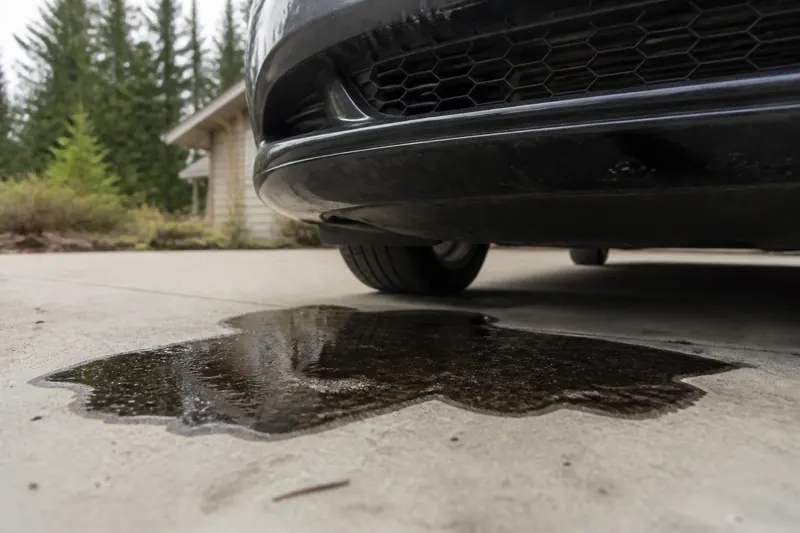
- Any fluid that keeps dropping: that’s a leak, and it’s worth finding before it turns into a bigger repair.
Thanks for reading, and local readers, come see us at our Woodinville shop soon. We check these fluids whenever your car is in for service, including every oil change, so it’s an easy way to stay on top of them.
Call 425-420-1630 or request an appointment, and we’ll check all your fluids for you.